
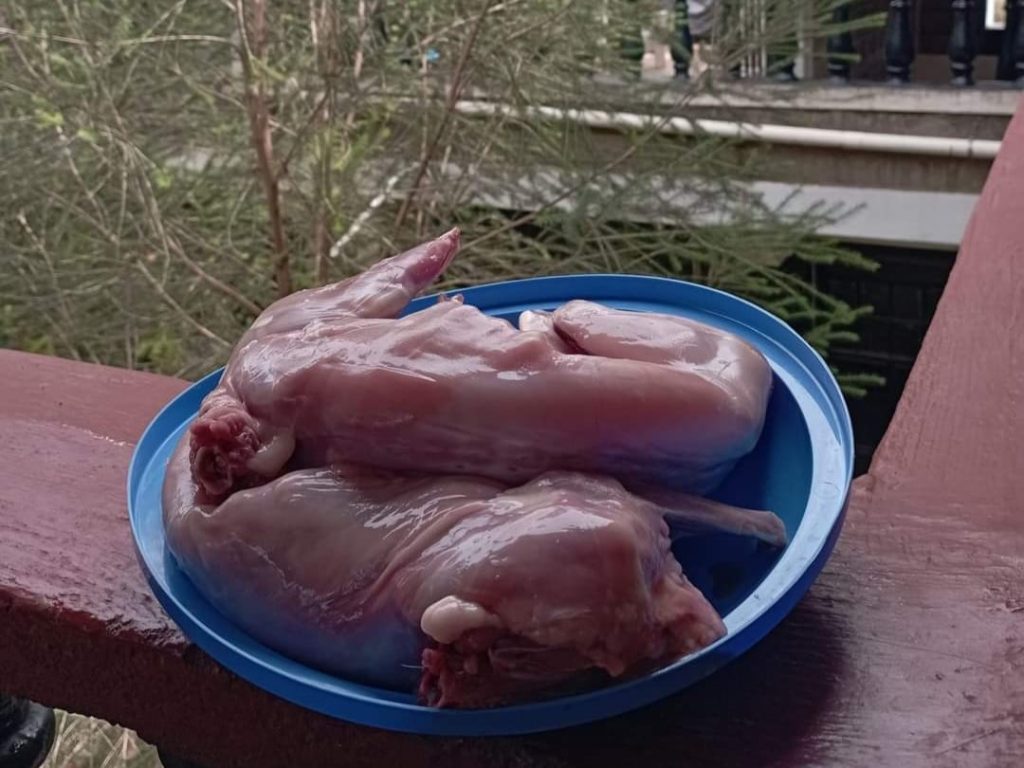
- Don’t Chase Quick Riches:
Avoid the mentality of wanting to become a millionaire with just a handful of rabbits. To make significant money, you’ll need to equally invest millions in capital. Understand that successful rabbit farming requires dedication, and don’t fall into the trap of believing that rabbit farming is a market-less venture. Commit to vertical integration by getting involved in every level of the rabbit value chain if able, from production to consumption. Be prepared for challenges, including capacity-matching issues across the value chain. - Be Your First Customer: Start by consuming rabbit meat yourself. Understand and appreciate the value of rabbit meat, which will help you in selling it to others. You won’t easily sell what you haven’t tried or understood.
- Start Small: Begin with a small rabbit population to gain experience and validate your sales approach. Once you’ve mastered selling small quantities, you can scale up.
- Advertise Locally: Use word of mouth in your local area. When your rabbits reach 2-3 kg of live body weight, let your neighbors know. They are your first potential customers.
- Leverage Social Media and Networks:
Use platforms like Facebook, Instagram, and WhatsApp to advertise your rabbits for sale. Share your story on local community groups, social clubs, and through church networks to reach a wider audience. - Referral Marketing: Tell your friends and neighbors about your business, and encourage them to spread the word. Offer them a convenient delivery option, or allow them to pick up the meat from your farm. This method helps build word-of-mouth marketing.
- Think Like a Businessperson: From the very start, approach your rabbit farming venture with a business mindset. Identify which sales channels offer the most growth potential. Remember, agribusiness is just as serious as any other business!
- Partner with Local Businesses: Approach a nearby small hotel or butchery and offer to supply them with rabbit meat. This gives them a unique menu option and helps introduce your product to a larger customer base.
- Open a “Kwa-Sungura” Joint or Cook-Up: Open your own kibanda or restaurant that specializes in rabbit meat. Offering dishes that feature rabbit meat will allow you to own the entire process and control how the product is presented. This could become your very own rabbit meat restaurant or butchery.
- Local Market Strategy: Take your rabbits to local livestock markets, just like chickens, cattle, and goats. Build a reputation as the “rabbit person” in your town. This will make your farm the go-to place for rabbit meat in the area.
- Offer Related Products and Services: Diversify your income by offering related goods or services. Sell breeding rabbits, hutches,
rabbit skins, manure, rabbit urine for fertilizer, and provide training services for those interested in rabbit farming. - Partner with Rabbit Traders/Middlemen: Look for established middlemen or traders who have their own sales channels. Sell your rabbits to them, earning a small cut from the margins they make. They already have the networks to move large quantities.
- Collaborate with Neighbors: If you receive more orders than you can handle, collaborate with your neighboring rabbit farmers to fulfill larger orders together. Alternatively, invest in scaling up your farm to meet the demand by expanding production with the methods that work best for you.
- Scale Up: Once you’ve mastered small-scale operations, aim to expand to larger-scale production. Consider farming 100,000+ rabbits as an enterprise, franchising rabbit meat restaurants and butcheries across Kenya and beyond. You could also explore exporting to international markets such as Dubai, China, or Europe.
- Understand Your Costs: Keep track of accurate production costs to calculate your profit margins. In Kenya, a rabbit typically costs Ksh 250 to produce, using a forage-supplemented diet with minimal pellets and hay, reaching 2.5 kg live weight or 1.3 kg carcass weight at 4 months of age. Urban farmers, however, may face higher costs around Ksh 519 per rabbit if all feeds are purchased.
By following these suggestions, you can build a successful rabbit meat business and establish a thriving presence in the Kenyan market. Whether through direct sales, partnerships, or expanding into the food service industry, there are numerous opportunities to grow your venture into a profitable agribusiness.
Give me Whatsapp number
Hi Barnet, you can reach us on whatsapp on +254757309126
I’m interested in Rabbit farming
Hi Elizabeth! Great to hear that. Call/Whatsapp us on 0757309126. You can also email us on info@rabbitcrewkenya.co.ke
Hallo Liz I do rabbits farming but am looking for market
I am interested in rabbit farming.do you offer training?
Hi Martin,
Yes we offer training. Reach us on +254757309126 to book a training session at our farm.
Hi team,
Kindly send me all the necessary info available on rabbit farming for a serious beginner.
Asante sana
Hi James,
We encourage you to book a full day training session with us.
I have over have
Hi Malach!
I would like to book the training for rabbit
Book via call/Whatsapp on +254757309126
Hi. Would like to sell rabbits that l have.
Who can buy from me?